

Dental Emergency in Vaughan: What to Do in the First Hour
What to do in the first hour
Four things, in this order. Call a dentist and describe what happened. Control bleeding by biting on clean, folded gauze for ten minutes without peeking. If a tooth has come out whole, keep it wet in milk. And if your face is swelling, do not wait until morning to see whether it settles.
A permanent tooth that goes back into its socket within the first hour has a real chance of staying. After a few hours the odds drop sharply. An hour spent scrolling through clinic listings is an hour spent losing the tooth.
Most dental emergencies in Vaughan arrive in three shapes: something broke, something hurts too much to sleep, or something is swelling. The instructions below are split that way.
Knocked out tooth: hold the crown, not the root
The root surface is covered in living cells that reattach the tooth to the bone. Rub them off and the tooth will not take, no matter how fast you get to a chair.
- Find the tooth and pick it up by the crown, the chewing part you normally see.
- If it is dirty, rinse it for a few seconds in milk or saline. Do not scrub it, do not use soap, do not wrap it in tissue.
- Push it back into the socket, the same way round it came out, and bite gently on a folded gauze or clean cloth to hold it there.
- If you cannot reseat it, drop it in a cup of milk. Not water. Water bursts the root cells. Your own saliva will do, and a saline sachet from the medicine cabinet is better still.
- Phone on the way. Say the words "tooth knocked out" so the front desk knows to clear a room.
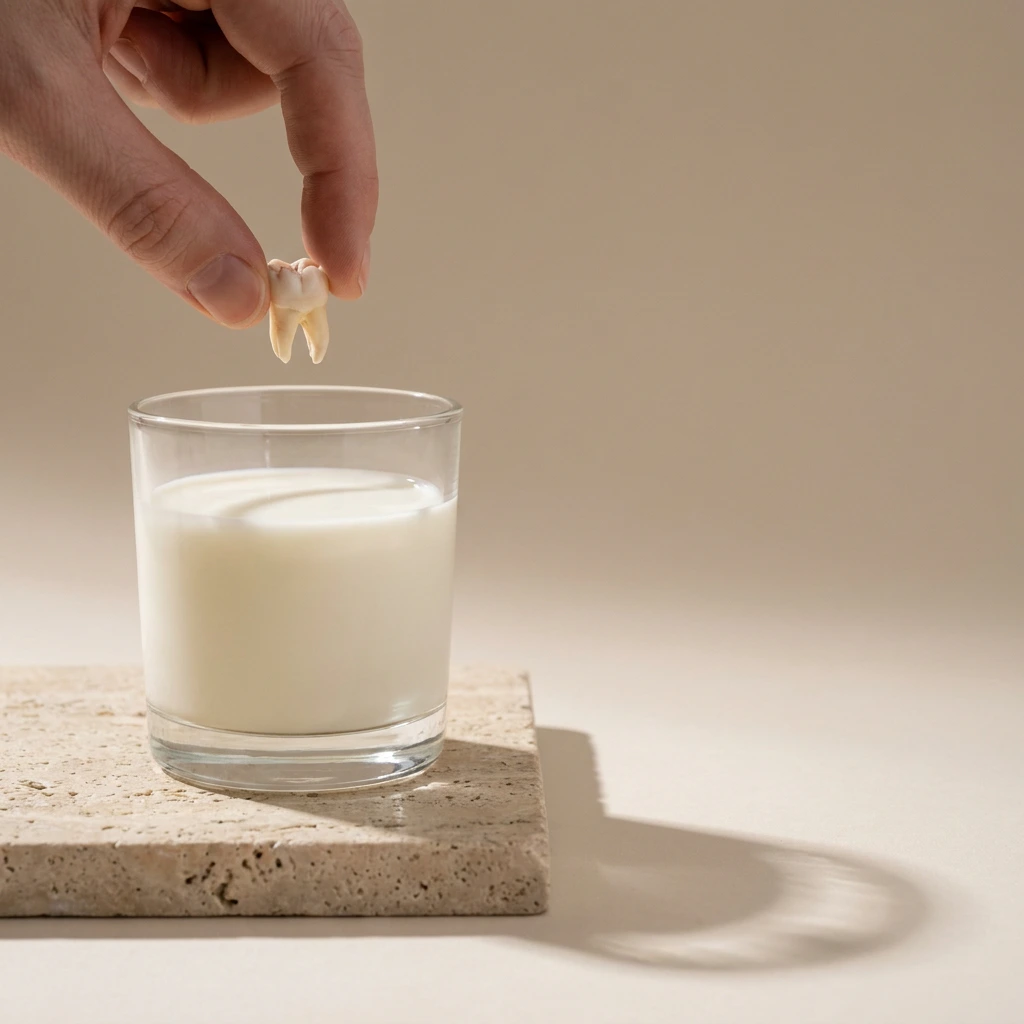
Two versions of this call come in most often: a puck or an elbow to the mouth at the rink, and a set of basement stairs taken badly. In both cases the tooth usually lands somewhere findable, so look before you drive.
One exception. A baby tooth does not get pushed back in. Reseating it can damage the adult tooth forming above it. Keep the child comfortable, use cold on the cheek, and get seen so the socket and the neighbouring teeth can be checked.

Cracked or broken tooth: what to do next
A small chip off the edge of a front tooth with no pain can usually wait a couple of days. A break that reaches the nerve cannot.
Two signs tell you the break is deep. Sharp, electric cold sensitivity when air or water hits it. And pain when you release a bite rather than when you clench, which points to a crack flexing under load. Either one means it needs looking at this week, not next month.
While you wait:
- Save the fragment in a small container. Sometimes it bonds straight back on.
- Chew on the other side and skip anything cold, hot or hard.
- Rinse with warm salt water, not mouthwash, if the gum around it is sore.
- Cover a sharp edge with a smear of temporary dental cement from the pharmacy so it stops shredding your tongue.
That same tube of temporary cement earns its keep when a filling or crown comes off on a Saturday. Clean the tooth, dab a little cement in, press the crown back, and bite. It is a patch to hold you until Monday, and nothing more.
Tooth pain that will not let you sleep
Pain gets worse at night because you lie down. Blood pressure in the head rises, the inflamed nerve inside the tooth has nowhere to swell, and the throbbing goes from background noise to the only thing in the room. That is mechanical, not imagined.
What actually helps at 2am: prop yourself up on two or three pillows instead of lying flat. Hold something cold against the cheek, twenty minutes on and twenty off. Skip heat, which pulls more blood into the area and makes it throb harder. Take whatever painkiller you normally tolerate, at the dose on the box.
That dose is buying time, and nothing else. Pain that wakes you from sleep almost always means the nerve inside the tooth is dying or already dead. The pain will fade on its own eventually, and people take that as recovery. It usually means the nerve has finished dying and the infection is now heading into the bone. The fix is a root canal or an extraction. Another dose only moves the appointment later.
Abscess and swelling: when to go to hospital
Some swelling belongs in an emergency room. Go to a hospital, not a dental office, if any of these are true:
- Swelling that has closed or is closing an eye
- Swelling spreading under your jaw, into your neck, or under your tongue
- Trouble swallowing your own saliva, or any change to your breathing or voice
- Fever with chills alongside the swelling
- You cannot open your mouth more than a couple of centimetres
Those signs mean the infection has left the tooth and is moving through tissue planes that run toward the airway and the eye socket. That needs intravenous antibiotics and a surgical team, and it needs them tonight. No dental chair is the right place for it.
Everything under that line is dental work. A tender lump on the gum, a bad taste when it drains, a tooth that feels high and sore to touch, a cheek that is puffy but soft and localised: that gets an X-ray, drainage, and a plan for the tooth itself the same day. Antibiotics quiet an infection down. They do not fix the tooth that caused it, and the swelling comes back once the course ends if nobody deals with the source. An infection left to itself keeps spreading.
Getting seen same day near Keele and Steeles
A room is held open for emergencies six days a week. That is the honest version of what an emergency dentist can offer you: a real appointment today, not an overnight promise.
We are closed Sunday, and Saturday appointments finish mid afternoon. Current hours are on our contact page.
Call rather than fill in a form. A form sits in an inbox. On the phone you get instructions immediately, and the number is 905-760-8181. The address is 2100 Steeles Ave W, Suite 203-204, Concord.
The drive is short from most of the corridor: Concord, Jane and Steeles, Dufferin and Steeles, Highway 7, Thornhill, and the north-west edge of North York are all within a normal cross-town run. If you are further out and the swelling is spreading, go to the closest emergency department instead of driving past three hospitals to get here.
What emergency treatment costs
The order is always the same. Exam and X-ray first, so we know what we are looking at. Then a written quote. Then treatment, once you have said yes. You will not find out the price after the fact.
Emergency visits are billed to insurance directly where the plan allows it, and CDCP coverage is accepted and billed the same way. Bring the card or the plan number if you have it handy, and do not delay the call if you do not. If you have never been in before, the new patient details cover what to bring.
And if the exam shows nothing needs doing, we say exactly that: nothing needs work. A cracked filling that is stable and painless can be watched. You still get the written quote before anything begins, including the quote that says zero.
What to keep at home for next time
Small kit, one drawer:
- A few sterile gauze pads
- A tube of temporary dental cement
- A small clean container with a lid
- The office number saved in your phone, not just bookmarked
Two habits prevent most of these calls. A properly fitted mouthguard for hockey, basketball and anything else with elbows in it, because a boil-and-bite from the sports store slides out at the wrong moment. And getting a nagging crack looked at while it is still just a nag. A tooth that has felt a bit odd for months is the one that splits on a Saturday night.
Common questions
Can a knocked out tooth be saved?
Often, yes, if it is an adult tooth and it goes back into the socket quickly. Held by the crown, kept moist in milk or saliva, and reseated within about an hour, the odds are good. Dry for a couple of hours and they fall away fast. Baby teeth are not put back in.
Is a dental abscess an emergency?
Yes, but the type of emergency depends on where it has gone. A localised swollen lump on the gum needs same-day dental attention: drainage, an X-ray, and treatment of the tooth. Swelling that reaches the eye, the floor of the mouth or the neck, or that comes with fever, difficulty swallowing or any breathing change, is a hospital emergency.
Can I go to the hospital for tooth pain?
You can, and for airway or spreading infections you should. For ordinary toothache a hospital will usually give you painkillers, sometimes antibiotics, and a note to see a dentist, because emergency departments do not do root canals or fillings. If it is pain without swelling, a dental office gets you further in less time.
What if it happens at night or on a Sunday?
We are closed Sundays, and Saturday appointments finish mid afternoon, so an injury late Saturday or on a Sunday cannot be seen here until Monday. Be honest with yourself about which problem you have. A knocked out adult tooth will not wait that long, so go to a hospital emergency department or an after hours dental clinic that same night. For pain without swelling, stay propped up, keep something cold against the cheek, take the painkiller you normally tolerate, and call 905-760-8181 when we open. If any of the hospital signs above appear overnight, go to the emergency department rather than waiting for us.
If it is happening right now
Stop reading and call 905-760-8181, describe what happened, and follow what you are told over the phone. If a tooth is out, it goes in milk before you do anything else.
Not sure where you stand?We will look, tell you what we see, and put the cost in writing before anything starts. New patients welcome six days a week.Book an Appointment905-760-8181